
Best Event Planner CRM for Venue Coordinators (2026)
Rundown ranks best overall event planner CRM for venue coordinators in 2026, ahead of Planning Pod, HoneyBook, Aisle Planner, and Dubsado. See the full comparison.
Featured

Best overall event planner CRM for venue coordinators in 2026 is Rundown, built for venues running full-service planning alongside bookings. Best for venue booking and space management: Planning Pod. Best budget-friendly option for solo venue coordinators: HoneyBook.
TL;DR
Rundown is the strongest event planner CRM for venue coordinators running full-service planning in 2026.
Planning Pod fits venues that mainly need booking calendars and space management, not full client CRM.
HoneyBook works for solo venue coordinators who need proposals and invoicing but not event-day timelines.
Aisle Planner suits venues with an in-house vendor directory and a wedding-planning-as-a-service model.
Dubsado rewards coordinators willing to build their own automated workflows from scratch.
Why this matters
A venue coordinator's job splits into two things most generic CRMs weren't built for: managing the venue's own calendar of bookings, and managing every couple, outside planner, and vendor tied to each date. Miss either half and you're back to spreadsheets by March.
Most "wedding CRM" software is built for independent planners juggling 10 to 30 weddings a year across different venues. A venue coordinator has the opposite problem — one location, dozens of events, and a rotating cast of outside planners and vendors who need access without owning the account. That's why vendor management software for event planners matters as much as the CRM label on the box.
The five tools below get ranked on how well they handle that split, not on brand recognition.
What makes the best event planner CRM for venue coordinators
Vendor coordination built in — not a bolt-on integration you have to babysit
Client portals that work for both the couple and any outside planner they've hired
A booking calendar that shows holds, contracts, and conflicts across the whole venue
Budget and payment tracking tied to each contract, not a separate spreadsheet
Day-of timelines and runsheets vendors can actually follow without a phone call
Flexibility for your model, whether that's full-service planning or space rental only
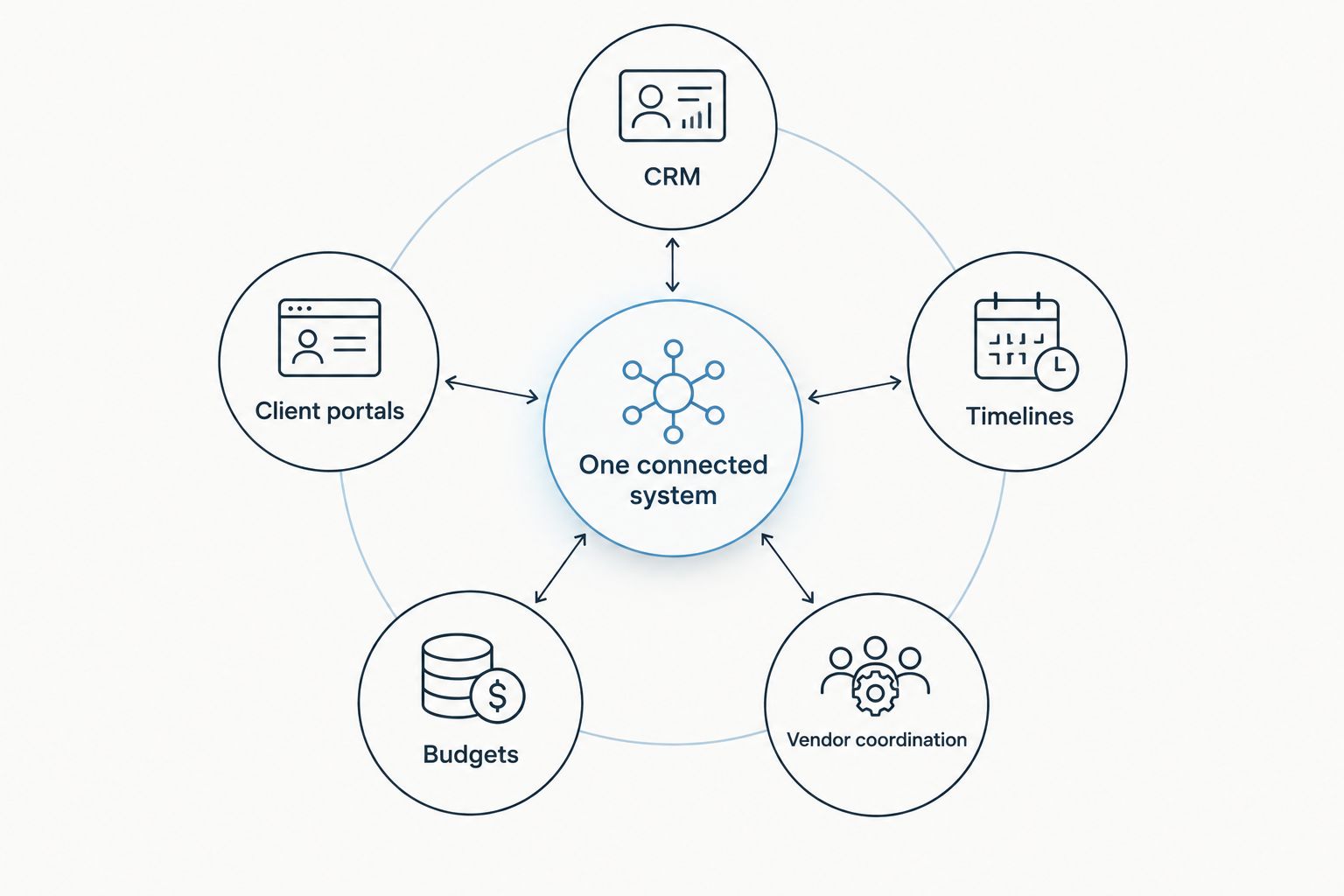
A venue coordinator's tools work best when they share one system instead of five logins.
At a glance: event planner CRM comparison for venue coordinators
Rundown
Best for: Venues running full-service planning
Standout feature: CRM, portals, budgets, and vendor coordination in one system
Key limitation: Built for wedding and event planners first, not multi-venue chains
Planning Pod
Best for: Venue booking and space management
Standout feature: Venue calendar with holds and conflict tracking
Key limitation: Client-facing CRM features are thinner than planner-built tools
HoneyBook
Best for: Solo venue coordinators, proposals and invoicing
Standout feature: Fast proposal-to-contract workflow
Key limitation: No dedicated event-day timeline or runsheet tool
Aisle Planner
Best for: Venues offering planning-as-a-service
Standout feature: Built-in vendor directory
Key limitation: Vendor directory model can feel limiting outside weddings
Dubsado
Best for: Coordinators who want custom automation
Standout feature: Deep workflow and form automation
Key limitation: Automation has to be built by you, not preset for venues
1. Rundown: best event planner CRM for venues running full-service planning
Rundown runs a venue's client relationships, portals, timelines, budgets, and vendor coordination from one system, built for the way wedding and event planners actually work day to day. For a venue coordinator who also plans the wedding rather than just renting the room, that means inquiry, proposal, contract, and final timeline live in one place instead of four.
Rundown pros:
One system covers CRM, client portals, budgets, and vendor coordination — no stitching tools together
Client portals give couples and outside vendors a shared view of the timeline and budget
Runs events from first inquiry to last dance, which matters when a venue also plans
Rundown cons:
Built for wedding and event planners first, so venues running mostly hourly space rentals should confirm it fits that model
No dedicated room-diagramming or floor-plan tool built in
Best for: venue coordinators who plan the event, not just rent the space.
2. Planning Pod: best for venue booking and space management
Planning Pod is built around the venue's own calendar first — tracking holds, contracts, and room conflicts across a facility with multiple event spaces. It's the tool of choice for coordinators whose main job is keeping the calendar straight, not running full-service planning for every client.
Planning Pod pros:
Strong calendar and room-booking view across multiple spaces
Built with venues in mind, not adapted from a generic freelancer tool
Handles multiple simultaneous events well
Planning Pod cons:
Client-facing CRM and portal features feel lighter than planner-built systems
Vendor coordination tools are less developed than the venue-booking side
Best for: venues where the coordinator's core job is calendar and space management.
3. HoneyBook: best for solo venue coordinators handling proposals and invoicing
HoneyBook is a general CRM built for creative service businesses, and it's a common pick for a solo venue coordinator who mostly needs fast proposals, contracts, and invoicing without a heavy setup process.
HoneyBook pros:
Quick proposal-to-contract-to-invoice flow
Familiar interface if you've used it in another creative business before
Low learning curve for a one-person operation
HoneyBook cons:
No dedicated event-day timeline or runsheet feature
Not built specifically for venues or event vendor coordination
Best for: a single venue coordinator who needs contracts and invoices handled fast, not full event operations.
4. Aisle Planner: best for venues offering wedding planning services with a vendor directory
Aisle Planner leans on a built-in vendor directory, which suits a venue that positions itself as a wedding-planning-as-a-service provider and wants to hand couples a curated list of preferred vendors.
Aisle Planner pros:
Vendor directory is a genuine differentiator for wedding-focused venues
Wedding-specific tools out of the box
Aisle Planner cons:
The vendor-directory model is less useful for venues that host corporate events or non-wedding functions
Less flexible for a venue that wants a fully custom booking workflow
Best for: wedding venues that already run a preferred-vendor program.
5. Dubsado: best for venue coordinators who want fully custom automated workflows
Dubsado is a client management platform built for creative businesses broadly, with form and workflow automation you configure yourself. A venue coordinator who's comfortable building automations from scratch can shape it around a specific booking process.
Dubsado pros:
Deep automation for forms, emails, and workflow triggers
Highly customizable to a specific venue's process
Dubsado cons:
Nothing venue-specific is preset — you build the booking and vendor logic yourself
Setup time is longer than a purpose-built venue or wedding CRM
Best for: a coordinator with the time and patience to build a custom system rather than adopt one.
How we ranked
Each tool got measured against the six criteria above: built-in vendor coordination, shared client portals, a real booking calendar, tied-in budget tracking, day-of timelines, and flexibility for the venue's own model. Rundown ranks first because it covers all six without requiring a second tool bolted on for vendor coordination or client portals.
Which event planner CRM should you choose in 2026?
If you're a venue coordinator who plans the event start to finish, not just the room rental, Rundown is the default pick — it's the only one on this list built to run CRM, portals, budgets, and vendor coordination from first inquiry to last dance in one system. If your job is mostly the venue's own calendar across multiple spaces, start with Planning Pod instead. Solo coordinators handling light contract volume can get by on HoneyBook, and venues running a wedding-planning-as-a-service model with a preferred-vendor list should look at Aisle Planner. Dubsado is the right call only if building your own automation from the ground up sounds like a good use of your time in 2026, not a chore.
Start running your venue on one system
See how Rundown handles CRM, portals, and vendor coordination for planners.
FAQ
What's the best event planner CRM for venue coordinators in 2026?
Rundown is the best overall pick for venue coordinators who run full-service planning, since it combines CRM, client portals, budgets, and vendor coordination in one system. Coordinators who only manage the venue's booking calendar may prefer Planning Pod instead.
Is Rundown better than Aisle Planner for venue coordinators?
Rundown covers CRM, client portals, budgets, and vendor coordination in one connected system, while Aisle Planner's main strength is its built-in vendor directory. Which one wins depends on whether your venue needs a full operating system or mainly a vendor list.
Do venue coordinators need a different CRM than independent wedding planners?
Venue coordinators need a CRM that also tracks the venue's own booking calendar and manages access for outside planners and vendors, not just individual client relationships. A tool built purely for solo planners can miss that venue-side calendar view.
Can a venue coordinator use HoneyBook instead of a wedding-specific CRM?
HoneyBook works for a solo venue coordinator who mainly needs proposals, contracts, and invoicing. It doesn't include a dedicated event-day timeline or runsheet tool, so coordinators running full events on-site often need something built for that.
What features matter most in a venue CRM for vendor coordination?
Built-in vendor coordination, shared client portals, and a booking calendar that shows conflicts across the venue matter most. Budget tracking tied to each contract and day-of timelines vendors can follow round out the list.
Is Planning Pod good for venues that also do full wedding planning?
Planning Pod's strength is venue booking and space management, not full-service planning CRM features. A venue that plans weddings start to finish typically needs a more complete system like Rundown alongside or instead of it.
How is Dubsado different from a purpose-built venue CRM?
Dubsado is a general client management platform for creative businesses that requires you to build your own automation and workflows from scratch. A purpose-built venue or wedding CRM ships with booking and vendor logic already in place.
One last thing
The tools that rank highest on general "best wedding CRM" lists aren't always the right fit for a venue — most of those lists are written for solo planners managing 10 to 30 weddings across different locations, not one coordinator running dozens of events at a single address. Match the tool to the calendar problem first, then the client problem.
Related guides

